
NTM - CENTRE OF THE BUILDING HERITAGE OF PLASSA
The centre of architectural heritage is located in the grounds of the former Cistercian monastery, which has undergone extensive reconstruction. The newly created interactive exhibitions focus mainly on the history of building culture in our territory. They describe traditional crafts, basic construction principles and building details. Within the exhibition, visitors can learn about different types of building structures, from foundations and rough construction to surface treatment, types of hole fillers and the corresponding technical equipment of buildings to roofs and roofing. Part of the exhibition is devoted to the principles of statics or wiring. For more information about the Building Heritage Centre project, visit the NTM website here.
The uniqueness of the exhibition devoted to the history of construction is complemented by a number of elements from the field of modern technologies. The exhibition itself is all about combining the history of the subject with the sensitive support of modern audiovisual means aimed at the most visual interpretation. The entire space is presented in such a way as to maximally underline the spirit of individual stops, to support education and to transport the visitor to ancient times in an entertaining way, or to provide the most intense experience connected with the interpretation of the exhibition. Visitors can, for example, take a walk through the forest, where they can see the work of foresters and experience woodworking almost first-hand. The unique atmosphere of the entire exhibition is created by ambient sounds, accompanying animations and holographic effects.
ABOUT THE PROJECT
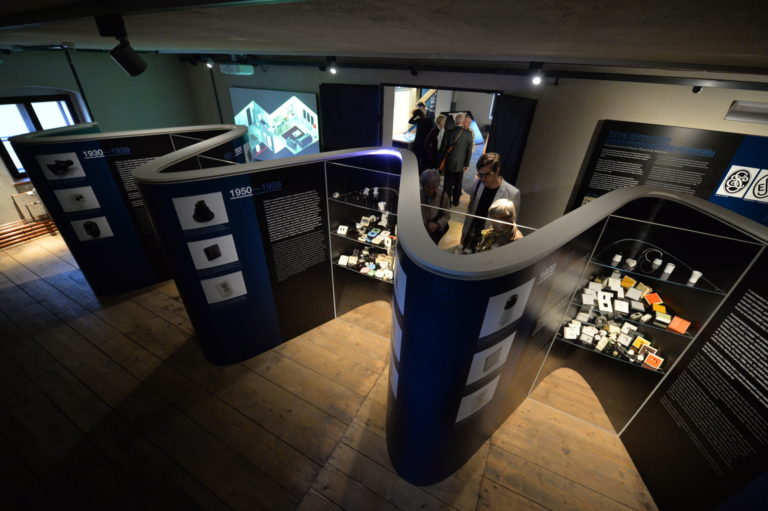
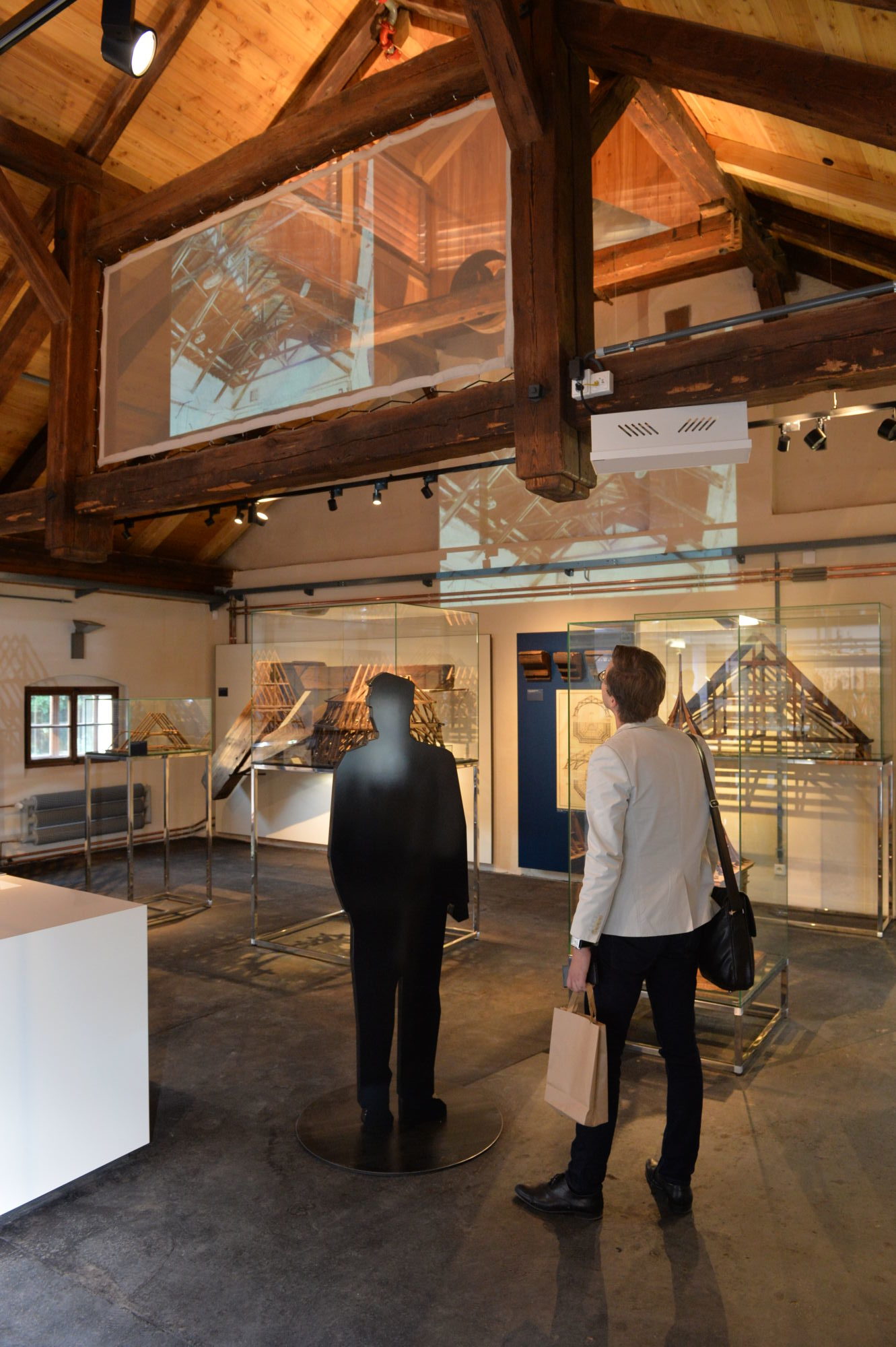
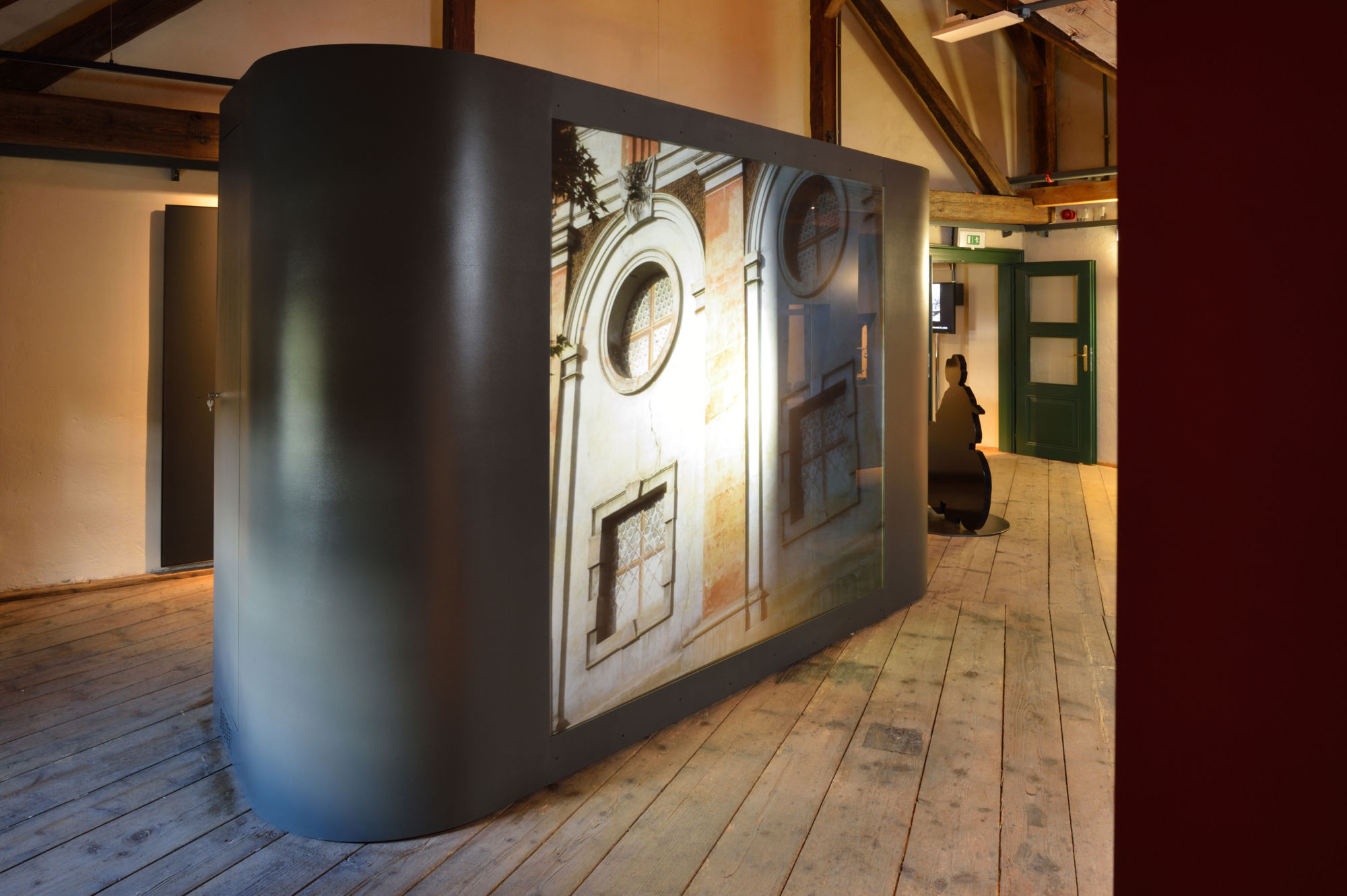
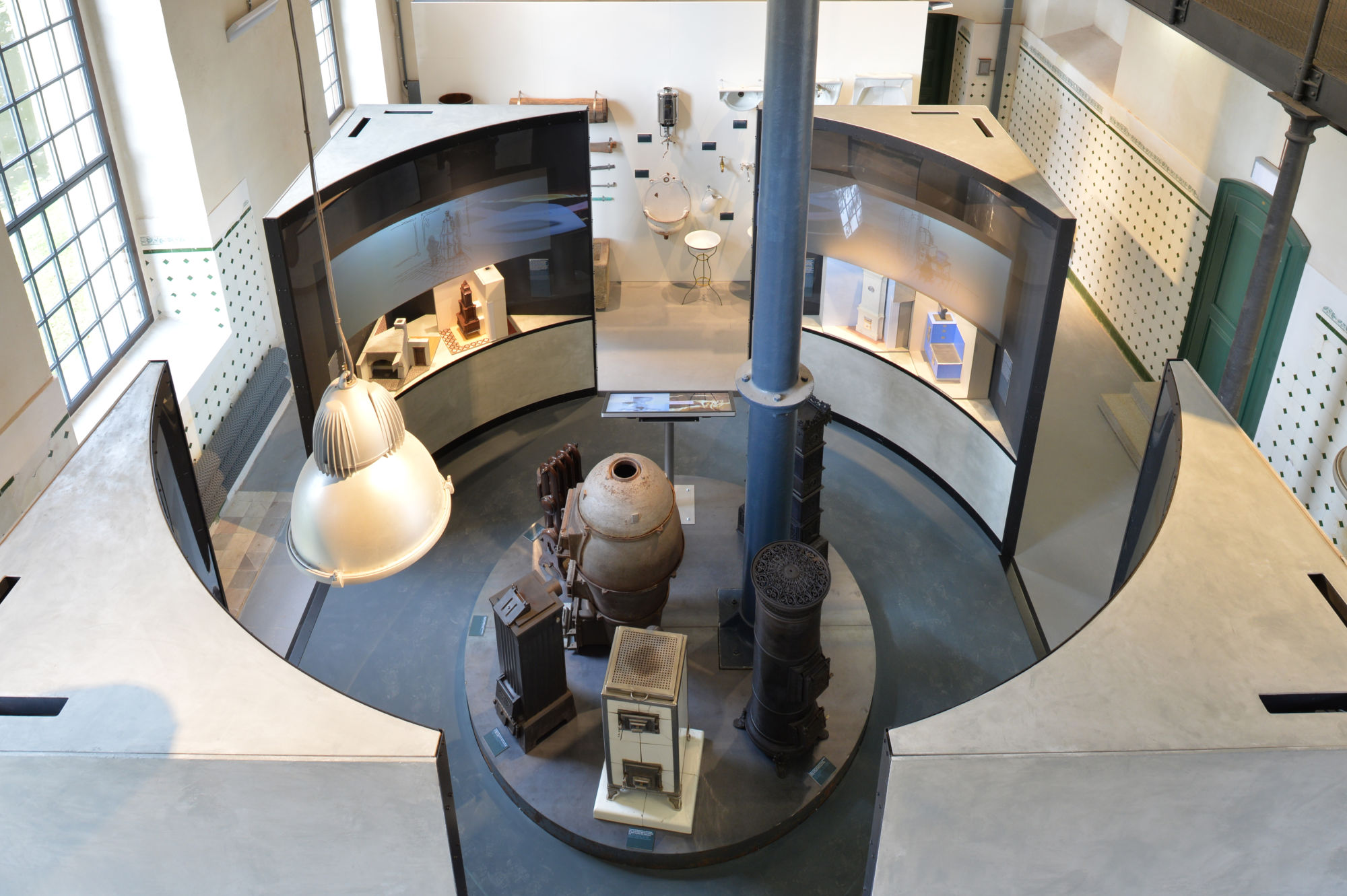
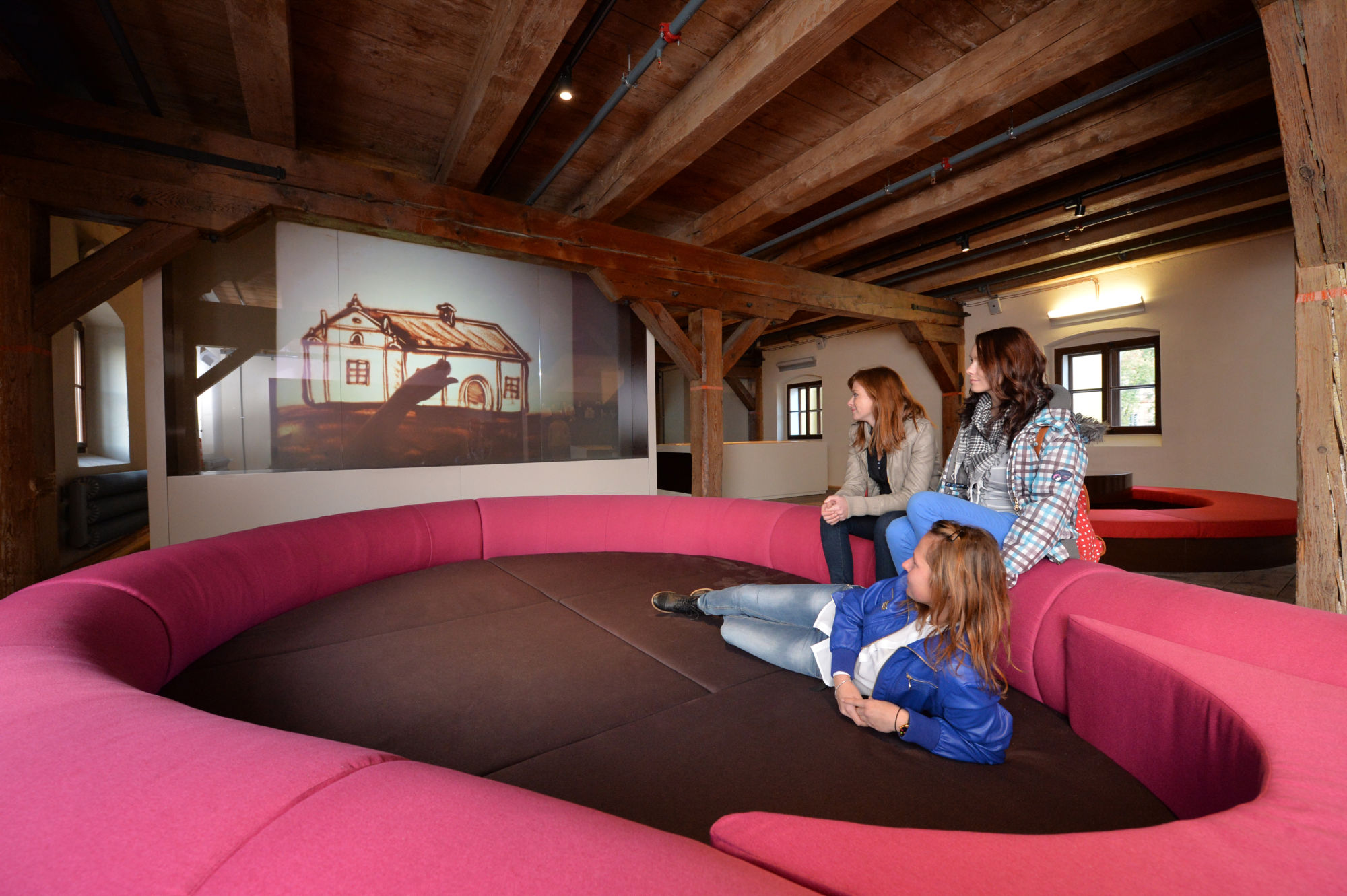
The project was created in cooperation with Ing. arch. Tomáš Bílek, from TBI architekti. "When creating the exposition in the Plask brewery and the farm yard, we respected the buildings and complemented them so that the exposition fundus would stand out from the buildings in a non-violent way. The legacy of today can be found in the exhibitions through state-of-the-art audiovisual solutions. We placed importance on creating an emotion, by linking the feelings and mood of a given exhibition. The exhibition itself is all about combining the history of a given subject with the sensitive support of modern audiovisual means aimed at the most visual interpretation. The atmosphere of the entire exhibition is completed by the lighting, which is implemented in such a way as not to disturb the visitor, but at the same time to highlight the atmosphere of the individual exhibits. Surface finishes were chosen to complement and push further the interior of the objects, The adjustment, including the showcases, is always based on the featured part of the house. For example, in the exhibit titled Rough Building, we used concrete tables and raw sheet metal as pedestals. The shape of the firebox, in a concrete object with sheet metal in place of the grate. In plumbing and water a glossy white wall, as bathroom tiles, etc. The windows and doors are exhibited in their natural position, so as to bring out their simple splendour and detail. The trusses are presented directly in the open trusses of the brewery building in all-glass cases, so that we can view them from all sides. "
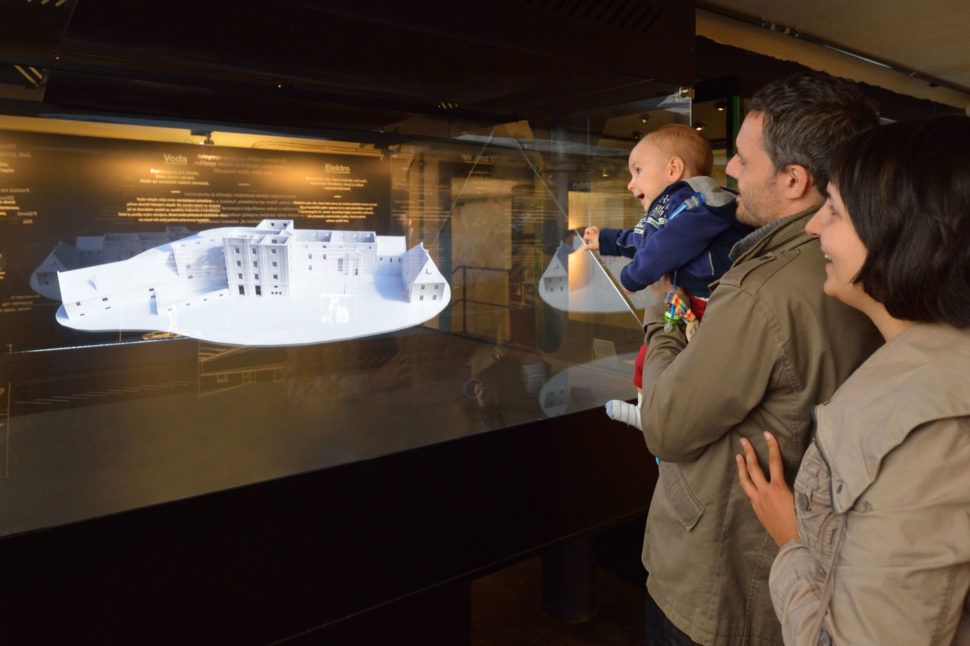
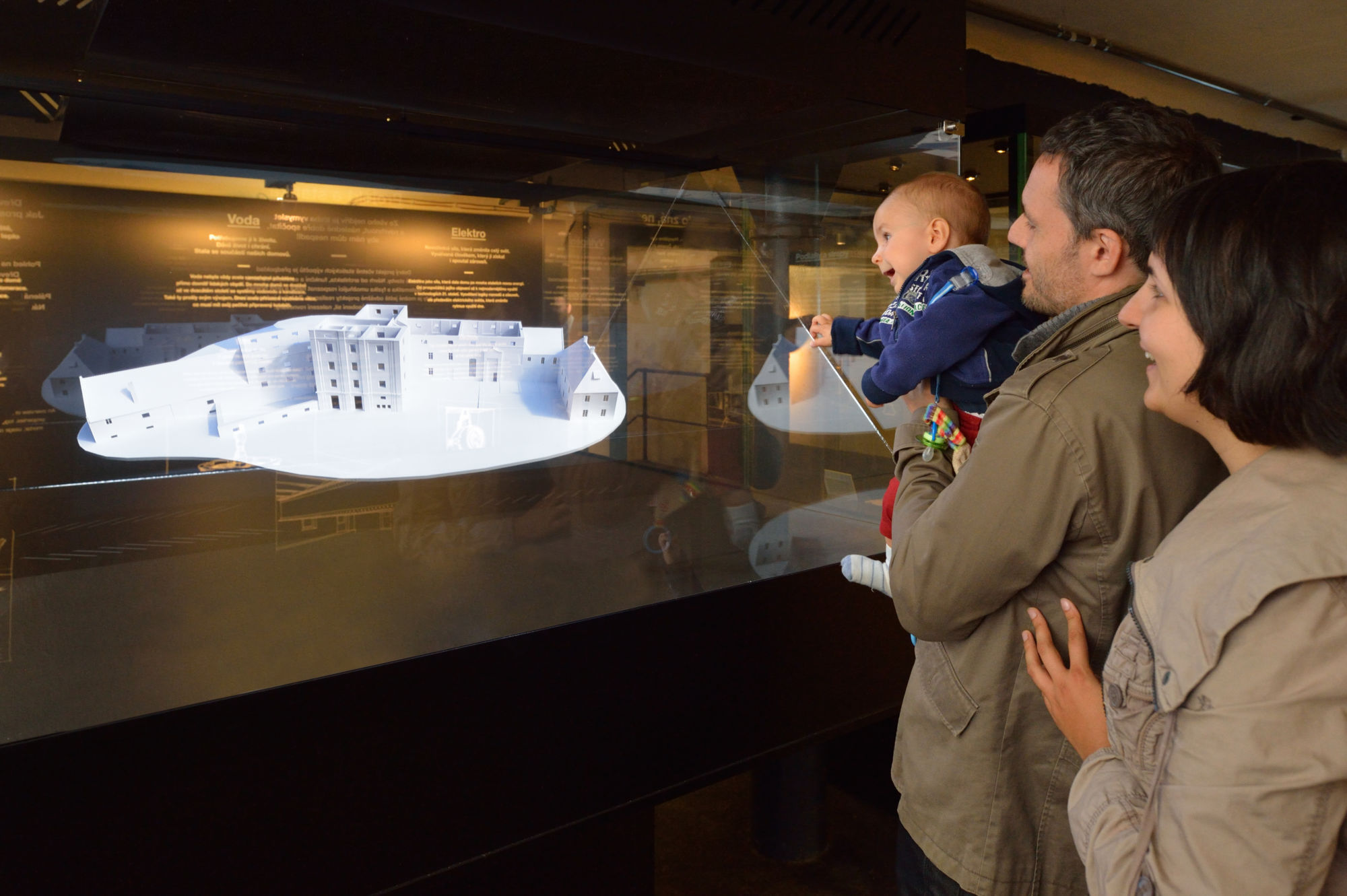
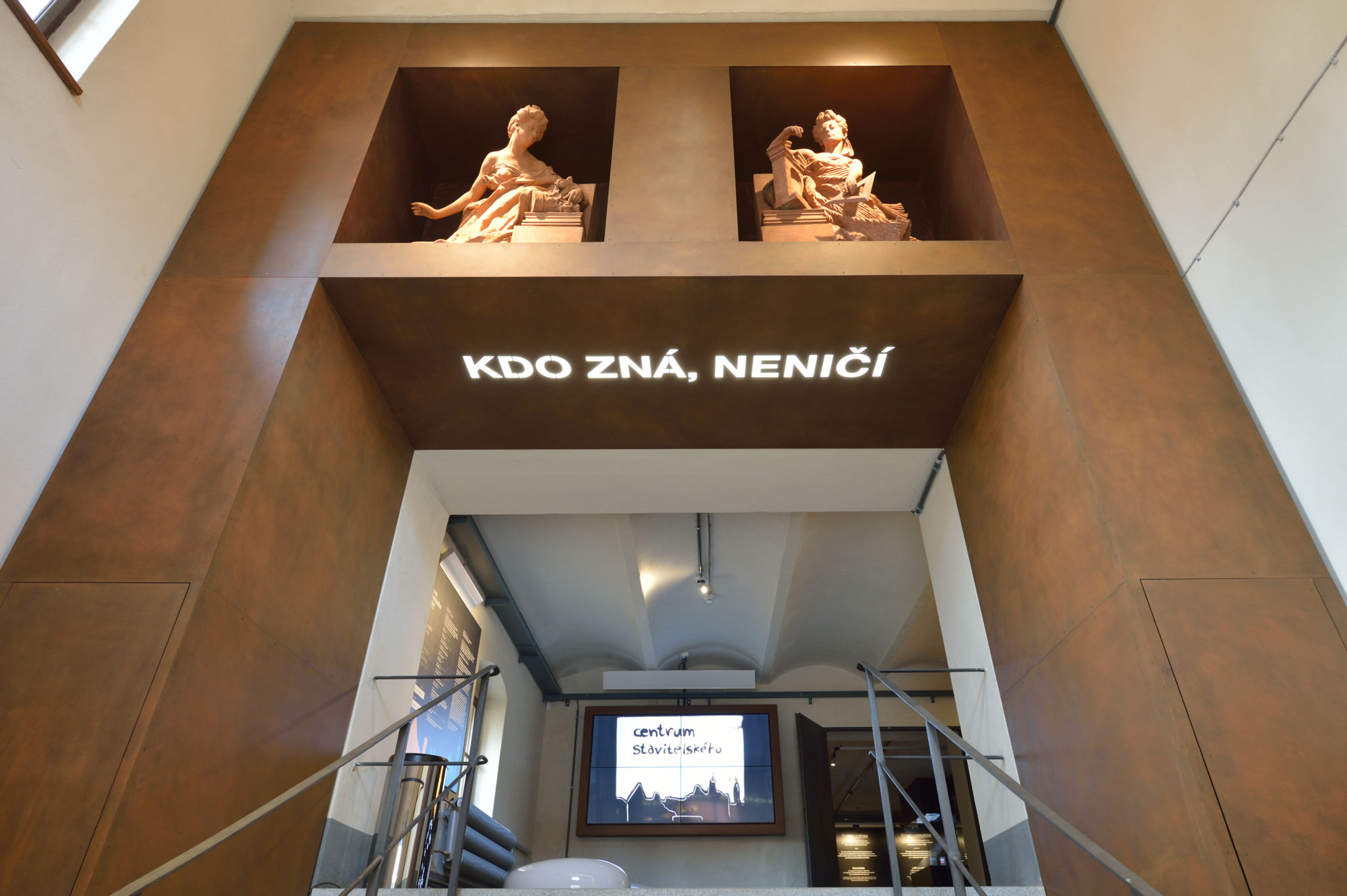
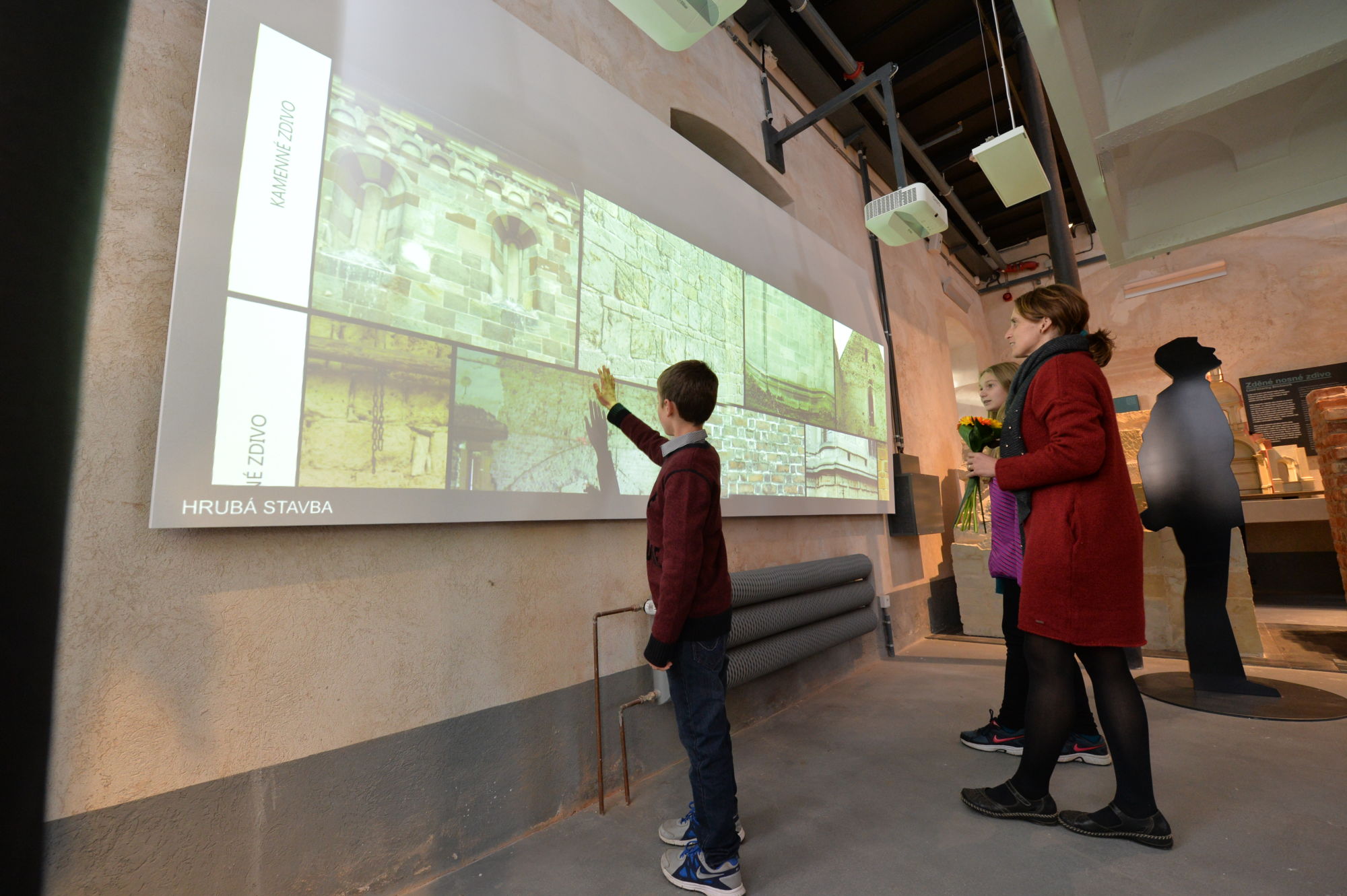
"The legacy of today's times can be found in the exhibitions through the most modern audiovisual technology, in the form of interactive touch tables, monitors, projections, etc. We have combined the projections with static objects in various ways to enhance the feeling and mood. In the ticket office we placed a large display set in rusted sheet metal, where the visitor can soak up the atmosphere of the entire museum. The central object in the entrance room of the exhibition is a 3D hologram where we "build" the Pilsen brewery, with references to the different parts of the museum.
Ing. arch. Tomáš Bílek, TBI
A very important part is the lighting, which is conceptually implemented so as not to disturb the viewer, but at the same time sufficiently illuminate the exhibits. The lighting principle beautifully completes the atmosphere of the individual spaces.
EXPERIENCE THANKS TO MODERN TECHNOLOGY
In addition to the interactive image gallery and catalogues, moving sketches of the fireplaces or a time-lapse of the plaster formation, visitors can see, for example, a visualisation of the growing building using the Pepper's Ghost effect. Through flat glass and special lighting, objects that are not actually on the site are shown. Particularly important is the impression of depth, which gives the image a 3D effect. The technology is used from the perspective of the building from the entrance. Watch the short video.
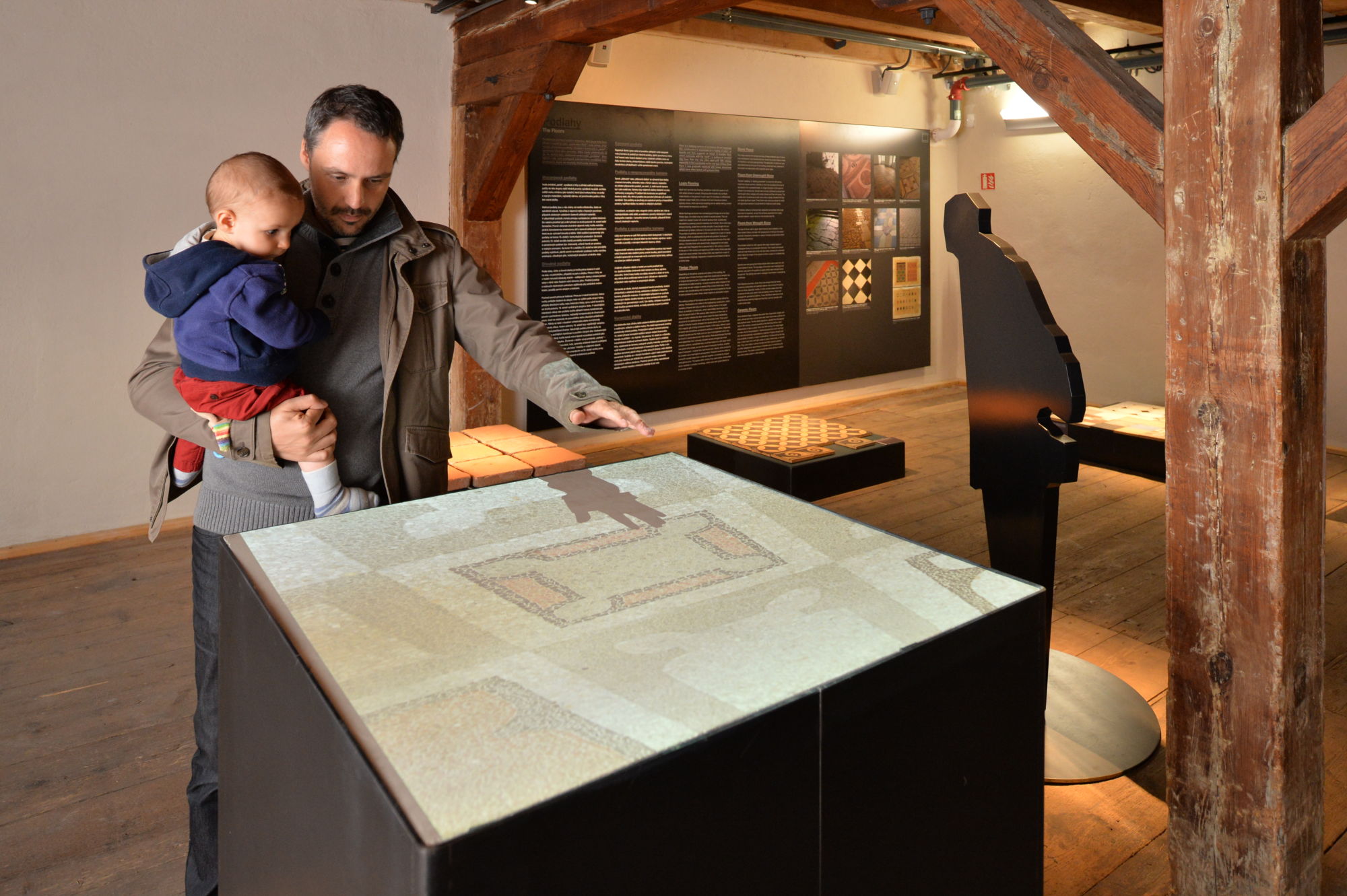
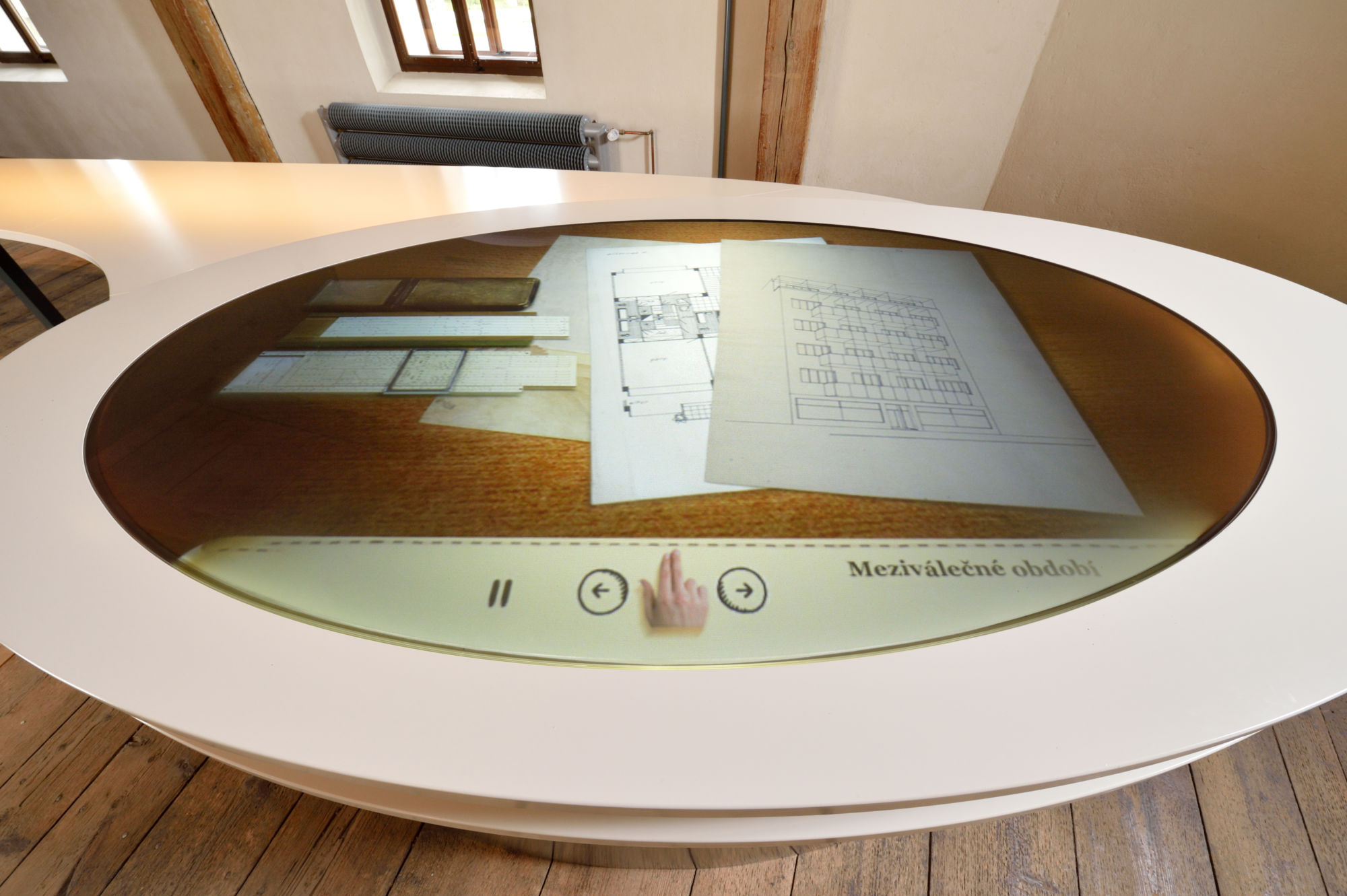
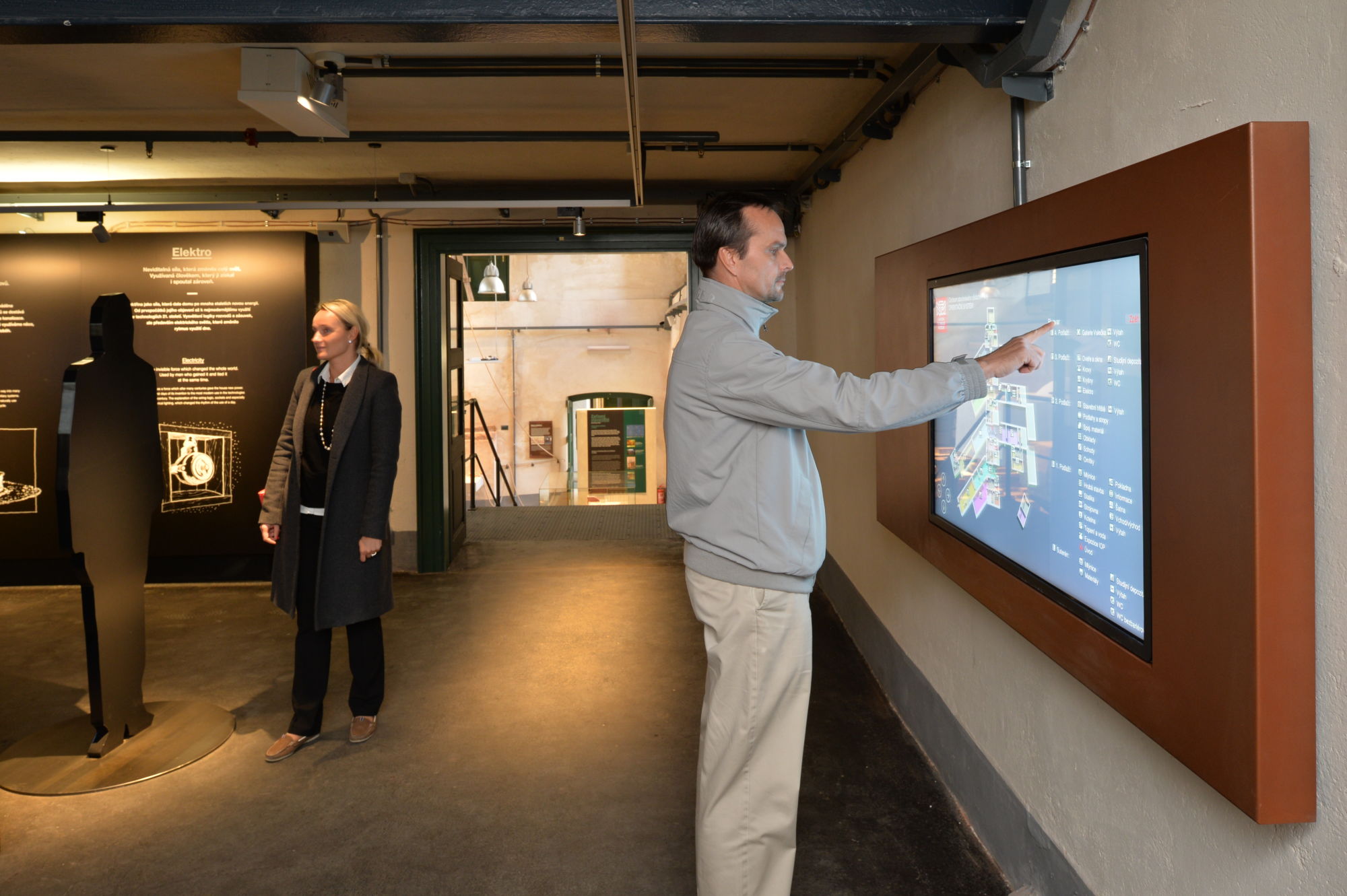
Other modern technologies include the Multi Touch table, which brings a variety of applications suitable for easy
and intuitive controls to make more efficient use of the screen area. Multi Touch also supports multi-user work
with support for common gestures. The exhibition is complemented by game rooms with interactive quizzes, aimed at children aged 6 and over, or educational screenings.
EXPOSURE LIGHTING
Due to the complexity and variety of architectural constructions in the premises of the former brewery in Plasy, it was not easy to deal with the task of exhibition lighting. The first and difficult step was to determine the positions and shapes of the lighting infrastructure (3-phase rails and rosettes). First of all, it was a matter of ensuring that their presence would not disturb the newly restored elements of the interior structures too much, and at the same time that they would provide suitable positions of the floodlights for illuminating both two-dimensional and three-dimensional exhibits while maintaining the visual comfort of the visitor.
The different scales of the exhibition spaces offered the use of a range of luminance curves (from the narrowest accents, to oval distributions, to asymmetrical wallwashers). LED floodlights of various wattages from 2W to 24W were also used, in three colour versions with a chroma temperature of 3000K. Thanks to the LED projection technique of light distribution, which is more efficient than the standard reflective optical system, more powerful and thus more bulky luminaires, which could visually disturb the impression of the architecture of the whole, did not have to be used.
The ability to rotate the headlight head in the hanging rail into the upper half-space proved to be a very useful feature, opening up the possibility of emphasising the rich construction of the historic trusses. In this way, exhibitions in general can gain an additional dimension that is in balance with the content of the exhibition.
Author. arch. Roman Hudec, ERCO
The entire installation was completed in a record time of 2 months. Visitors can look forward to dozens of projections, monitors, interactive elements, sound systems, touch technologies, interactive screens and much more.





Contact us